
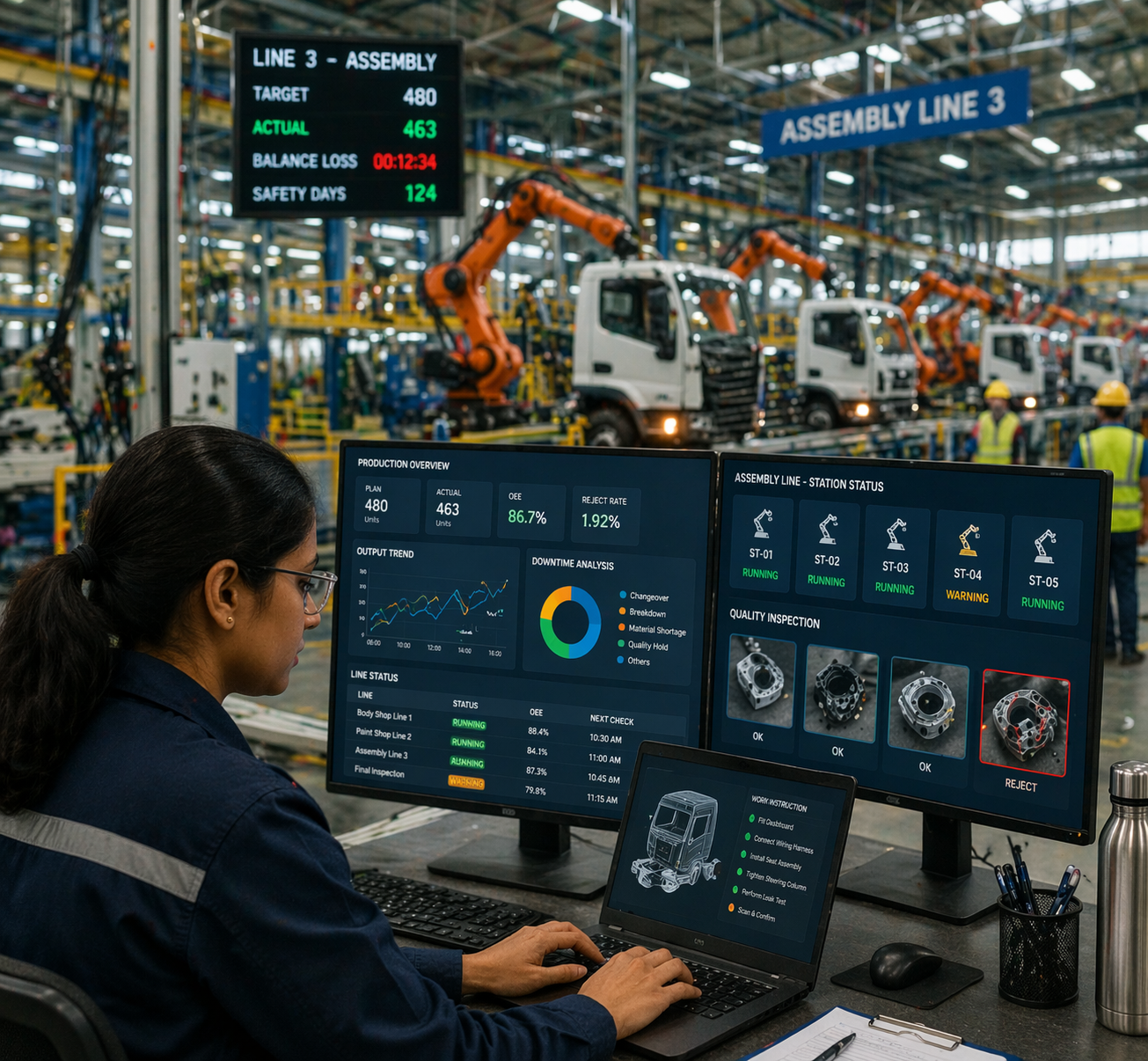
The IIoT Reality Check
Most IIoT vendor pitches show a beautiful dashboard connected to brand-new equipment. The reality on your shop floor? A mix of 20-year-old PLCs, manual processes, and maybe a couple of modern CNC machines. Connecting all of that is an engineering problem, not a procurement one.
Protocol Landscape: What You’re Actually Dealing With
Before buying any platform, understand what protocols your equipment speaks:
- OPC-UA — Modern standard for industrial equipment. Most new PLCs and CNC machines support it. This is your primary integration path.
- Modbus TCP/RTU — Common in older PLCs, sensors, and power meters. Simple, reliable, well-supported.
- MQTT — Lightweight pub/sub protocol, ideal for sensor data. Not a machine protocol — it’s the transport layer between edge and cloud.
- Proprietary protocols — Siemens S7, Allen-Bradley EtherNet/IP, Mitsubishi MC Protocol. You’ll need specific drivers or gateways.
The Edge Computing Architecture
Don’t send raw sensor data directly to the cloud. The architecture that works:
- Edge gateway at each machine or line — collects, filters, and pre-processes data
- Local MQTT broker — aggregates data from multiple edge devices
- Edge compute layer — runs basic analytics, threshold alerts, and data reduction
- Cloud/on-prem backend — stores historical data, runs ML models, serves dashboards
This approach reduces bandwidth costs by 70–90% and keeps your system running even when internet connectivity is unreliable — a real concern in many Indian industrial zones.
Starting Small: The 4-Week Pilot
We recommend a focused 4-week pilot on a single production line:
- Week 1: Audit equipment, identify data points, install edge hardware
- Week 2: Configure protocol adapters, establish data pipeline
- Week 3: Build real-time monitoring dashboard, set alert thresholds
- Week 4: Validate data accuracy, train operators, document findings
Total hardware cost for a single-line pilot: $2,000–$5,000 (edge gateways + sensors). The software is where the real value — and complexity — lives.
Common Pitfalls
- Over-instrumenting: You don’t need 500 data points from one machine. Start with 10–15 that actually drive decisions.
- Ignoring the human layer: If operators don’t trust the data, nothing changes. Involve them from Day 1.
- Cloud-first architecture: Edge computing isn’t optional in manufacturing — it’s essential for latency and reliability.
Ready to explore IIoT for your plant? Book a discovery call and we’ll help map your equipment landscape.